Apollo Moon Return: So, How’d Those Astronauts Get Back?
Ever scratch your head wondering why it took a hella giant rocket – you know, hundreds of feet tall, thousands of tons – just to get to the Moon, but the actual Apollo Moon Return? Seemed like it barely needed a push. It’s a real brain-buster for lots of folks. Especially those skeptics still muttering about whether we even went. Lots of people online ask: how could just a tiny module shake off the Moon’s gravity and zoom back to Earth? But here’s the thing. Getting home? Way different physics. Simple.
Earth’s Gravity: The Apollo Astronauts’ Secret Weapon
Okay, let’s just lay it out. Going from Earth to the Moon? Way harder than coming back. Why? Earth’s gravity. It’s huge. Like, six times stronger than the Moon’s pull. Or roughly 15% of Earth’s. To blast through that colossal pull, to truly escape? You gotta hit over 11.2 kilometers per second. And that needs some serious, bone-rattling oomph. Tons of fuel, too.
Imagine this: leaving Earth is like tearing free from a super-strong magnet. But coming back? Just getting reeled in. Once you’re clear of the Moon’s wimpy gravity, Earth’s pull does most of the hard work.
Saturn V: Not a Trip to the Moon, But a Ticket Outta Here
Forget what you think you know: The mighty Saturn V? Never actually went to the Moon. Wild, right? Yep, true. This monster rocket, like most, had one main gig: shooing its huge payload – that’s the Apollo modules, crew, all the gear – outside Earth’s atmosphere. And away from its hefty gravitational hold.
And another thing: almost all of that massive rocket? Nearly 90% of it? Didn’t even touch Earth orbit. Staged process, see. It dropped huge chunks of itself as fuel burned off, hitting faster and faster speeds. First stage hauled the stack to over 8 kilometers per second. Then the second stage gave the Apollo module that final push, away from Earth’s grab. Once the crew was really “going to the Moon”, what remained of that 363-foot, 3,000-ton Saturn V was just the little 48-ton Apollo command and service module.
Shedding Weight: The Art of Space Travel
Weight in space? Total enemy. Pure and simple. Every extra pound needs more fuel. More fuel means more weight. Bad loop. But Apollo? They crushed this problem. Basically, clever stage work, dumping weight and parts exactly when needed. No random trash toss. Careful plan to save fuel. Critical.
Every single scrap, every bit of gear, got checked: Do we really need this for the next bit? No? Left it there. And this constant chase for lightness? That’s how missions succeeded. And ensured the safe Apollo Moon Return.
The Lunar Module’s Clever Two-Part Plan
Landing on the Moon? Not just one thing. That weird-looking Lunar Module lander? Built in two parts. When Neil Armstrong and Buzz Aldrin walked around in ’69, their ride was a two-story vehicle. The bottom half, the “descent stage,” had the landing gear, engine, all sorts of equipment. Even the lunar rover on later trips.
Time to leave the Moon? Astronauts just hopped into the top “ascent stage.” Everything else? Stayed put. All that heavy landing gear, that old engine, used equipment, even lunar rock samples not taken, and a lunar rover – all just sat there. Because this cut the weight like crazy for liftoff. Made it possible to get out of the Moon’s wimpy gravity with a way smaller engine. And hardly any fuel.
Docking in Orbit: A High-Stakes Space Ballet
Blasting off the Moon was one hurdle. But then came the real heart-stopper: hooking up with the command module again. Remember Michael Collins? The third guy? Not on the Moon. He was up there, orbiting. Just chilling. Waiting for his pals. The ascent stage of the lunar module? Shot up from the Moon’s surface. Heading for Collins, in lunar orbit.
This wasn’t “parking lots of space”, not even close. But the command module? Zipping around the Moon super-fast. So the lunar module had to hit the exact same speed and path. Then dock. Perfectly. Just a tiny screw-up? Either module could launch into deep space. Or bash into each other! A total cosmic wreck. Super tense. A high-wire space act, with humans doing it hundreds of thousands of miles away.
Slingshot Home: Hitting the Gravitational Bullseye
Everyone back in the command module? Good. The lunar module’s ascent stage already ditched. Going to crash or burn. So, time to head for Earth. The command module’s main engine fired for just a sec. But it was crucial! It flung the capsule out of lunar orbit. Onto a just-so path. And get this: It wasn’t full power all the way home. It used Earth’s gravity. A gigantic slingshot.
Picture this: You’re being sucked in by a massive magnet. Once free of the Moon’s slight pull? Earth’s gravity snags the spacecraft. Speeds it up. For most of the trip back, the module just cruised. Pulled along by the sheer oomph of our blue planet. Saved tons of fuel for that long journey home.
Re-entry and Splashdown: The Fiery Descent
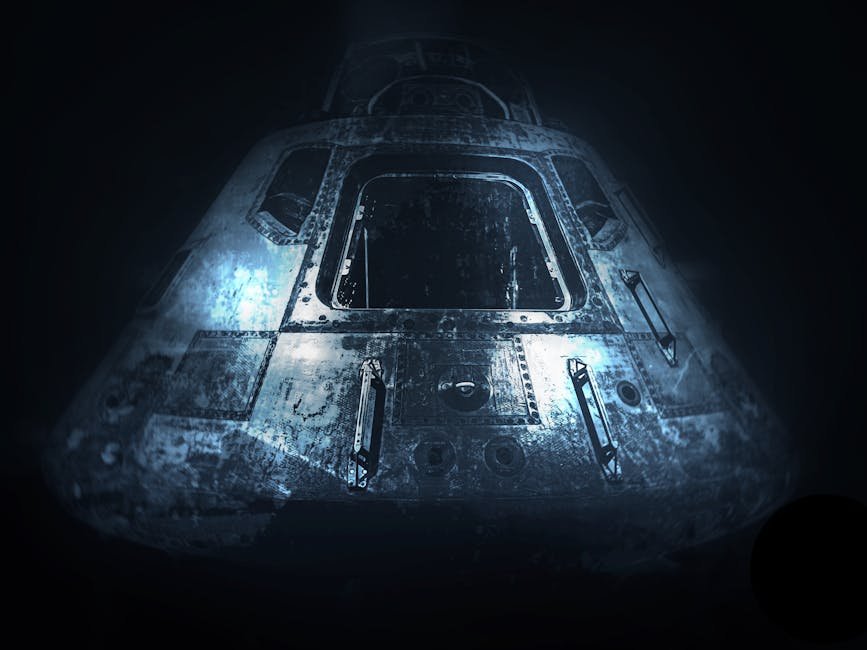
The last bit of the trip? Probably the most intense to watch. The command module split off from the service module – that’s the engine part. Ready for re-entry. Only the tiny command module made it back. Size of a small car, maybe. And this little capsule? mostly a huge heat shield.
Why? Because ripping through Earth’s air at thousands of miles an hour? Creates massive friction and heat. The capsule’s outside would blaze cherry-red. Just burning off, layer by fiery layer. That’s why it had that flat, blunt end facing forward. To spread that incredible heat. After enduring that insane, super-hot dive through the atmosphere, the module popped out parachutes. They slowed it way down. Then, a soft splashdown. Usually in the Pacific. And U.S. Navy teams? Always waiting. Ready to snag the capsule and those brave guys almost instantly.
The entire trip, from Earth, to the Moon, and back? Pure genius. Engineering, physics, total human guts. We pulled it off six times, too. What a track record! And get this: that same basic approach? It’s happening again real soon. New missions from NASA, SpaceX, Boeing, whoever. All heading for the Moon. Get ready to see people walking up there again. For real.
Frequently Asked Questions
Q: So, is it really easier to come back from the Moon than to go there?
A: Big time easier. Just needs less energy. Because Earth’s gravity? Way stronger than the Moon’s. Once that Apollo command module was clear of lunar orbit, our planet’s huge gravity just pretty much sucked it right back home. Like one giant magnet.
Q: And what about all those Saturn V rocket pieces? Where’d they go?
A: The Saturn V was a multi-stage beast. Its only job was to get the Apollo stuff out of Earth’s air. So, yeah. Most of those huge stages? They detached. Fell back to Earth. Or just hung around below orbit. Never even saw the Moon.
Q: How’d they actually get back to Earth safely?
A: The Apollo command module – the only part that came home – had this super tough heat shield. It saved them from the insane heat from ripping through the atmosphere. After slowing down a bit in the air, parachutes popped out. Giant ones. Slowed it right down for a soft splashdown in the ocean. And Navy recovery teams? Always right there. Waiting.