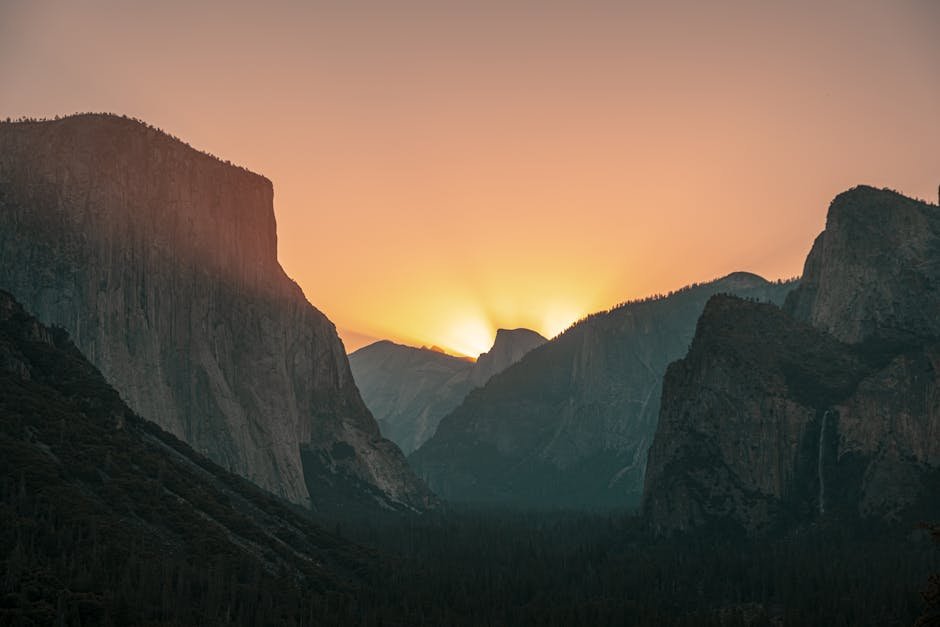
Yosemite National Park: Checking Out California’s Nature Stunner & Its Tough Challenges
Ever thought paradise had an end date? Because right here in California, Yosemite National Park, a whopping 3,000 square kilometers of absolute natural awesome, isn’t just some pretty picture – it’s a fight. This lively wild spot, home to epic giant sequoias and towering granite, pulls in millions. But it’s got some seriously heavy environmental challenges. More than 900 people have tragically died on its gnarly cliffs, a blunt reminder of nature’s raw power. Still, it’s the quiet, ongoing stuff that really needs our attention.
A Mixed Up Landscape Facing Big Problems
Yosemite usually feels like an island, a super clear safe zone on the map. But come on, it’s tied to everything. Climate change isn’t theory here; it’s a fast-moving mess. You see it all over this park.
Glaciers? Shrinking fast. Experts figure that in 20 to 50 years, the last ice will be GONE from the Sierra Nevada. Think about that. We might be the last folks to actually see them. And this matters because for months after winter, when rain is scarce, the whole region absolutely needs snowmelt for freshwater.
This water shortage hits everyone. Farmers in the Central Valley, California’s farming backbone, are already wrestling with water big-time. Then Mono Lake? Almost gone. It nearly vanished when Los Angeles took way too much freshwater. Environmentalists battled hard in court and won. But the water fight is never-ending. Almond farms, a hella huge part of California’s economy, often get blamed for all that water usage. Growers are adapting. Less water now. And another thing: crazy groundwater pumping has even made parts of the land sink. Just crazy.
Wildfires are another brutal fact of life. Eighty percent? Human-caused, usually just by not caring. Firefighters bust their butts, backed up by an unexpected crew: state inmates. These guys, living in wildland camps, actually earn trust. They fight blazes and clear fire breaks with chainsaws. Many find purpose. A real sense of it.
But nature’s destructive acts aren’t always our fault. Rockfalls, like the massive house-sized chunk that recently dropped from El Capitan, they’re just natural. They cause some deaths and injuries. Trees fall. Floods rise. Fires burn. So park management lets nature do its thing, not always stepping in to “clean up.”
Unfortunately, drought-weakened trees? Easy pickings for bark beetles. These bugs are making tons of trees die off. In 2016 alone, 60 million trees kicked the bucket across California, with 2.4 million hit hard in Yosemite. Even the old sequoias, which can slurp up 2,000 liters of water a day, are showing dry signs. Usually, their toughness keeps them going for millennia. But conditions are just changing too dang fast. And their future? Who knows.
How Not to Be a Jerk When You Visit
With five million visitors every year? Yosemite gets a lot of love, maybe too much. Tourists, kinda like the park’s black bears, can sometimes lose their natural caution. Bears got aggressive, even died. Why? They were routinely fed by folks or raiding unsecured trash. They croaked from eating human garbage.
Look, behave: you absolutely, 100% cannot store food outside, and every piece of trash must go into those locked, bear-proof containers. Problem bears get moved, sure. But our smart choices are the best defense.
Outside the park, hunting’s okay with a license, but illegal poaching? Still a problem. Even luring bears with yummy stuff like citrus and chocolate has been spotted just outside the park lines. Inside Yosemite, though, the rule is crystal clear: look, don’t touch.
The park is open to everyone for about $25 per carload. But its huge popularity during busy times means long lines. Even a lottery for iconic climbs like Half Dome. We roll in from nearby cities in tons, just looking for a calm spot to ditch daily stress. Ranger Peter Wine says a lot of visitors now come to “consume” instead of truly “see,” missing the quiet amazing stuff, like a Jeffrey pine smelling like vanilla. Just listen.
Water. We Gotta Save It
Beyond its incredible views, Yosemite is a backbone, a vital pipeline for the whole region. Its clean mountains give cities and farms fresh water, for everyone. Scientists? They’re always checking glaciers for clear clues of long-term warming and drying. The Mono Lake win, where greens forced LA to actually control its water use, really shows what passionate Californians can do. But the fight isn’t over. The real problem is making sure a growing population and a massive farming industry don’t totally screw up this natural resource for good.
Wildfire Risks & Getting Forests Back
Fires are tricky here. While they often wreck stuff, controlled burns? Clever tools, these. Park staff light fires on purpose, doing what nature would do anyway. This clears spots for new trees to sprout. It gets that mineral-rich dirt out there, soil that certain seeds need to really kick off, helping the forest grow back and lessening the “fuel” for future, way nastier wildfires. The state’s inmate fire crews, usually the first ones on the scene, are super important for this work, clearing roads and protecting buildings when big blazes start up.
Help Keep the Park Awesome
California, even with all the political garbage from D.C., still leads the way on keeping our environment safe. We’ve got this “Galician village” vibe here—a hardcore local refusal to let policies mess with our wild places. Supporting local environmental groups, following all park rules, and learning about Yosemite’s special nature system are things everyone can do. Every action screams the spirit of early nature protectors like John Muir, who got President Theodore Roosevelt to save this land forever.
The peacefulness of Yosemite is a massive draw. A place where folks figure out what’s really important. John Muir once said, “In every walk with nature one receives far more than he seeks.” Yosemite will always be here. It’s on us to make sure its wild soul lasts for generations to come.
FAQs
Q: How many climbing deaths has Yosemite had?
A: Over 900 people have tragically lost their lives on the tough rock walls and cliffs inside Yosemite National Park.
Q: What does Yosemite do about bears playing chicken with humans?
A: The park has super firm rules against storing food outside, and all trash has to go into bear-proof containers. Bears that get used to people or cause static are often caught and moved to somewhere way out there. Hunting bears is totally not allowed inside the park.
Q: What’s the deal with controlled burns and fighting wildfires in Yosemite?
A: Controlled burns are fires staff set on purpose to copy natural fire cycles. These fires help cut down on burnable stuff. They also help new trees sprout by making the mineral soil prime for seeds. Ultimately, this cuts the chance of bigger, nastier wildfires happening.