The Quantum Suicide Experiment: What If You’re Always Alive?
Ever wonder what happens after you pick something? Like, where do all those other possibilities just go? Picture this: every single decision, every flip of a coin, every tiny quantum event actually blows reality wide open into brand new universes. That’s not just some weird, New Age talk, no sir; it’s the mind-bending heart of the Quantum Suicide Experiment. It’s a pure thought exercise, cooked up to poke at the deepest secrets of quantum mechanics and maybe, just maybe, prove the multiverse is real.
Seeing the Multiverse Through Head Games
Quantum physics? It’s a beast. A field that twists your brain harder than a pretzel, trying to explain how the universe works on a super-small scale. And it just doesn’t make everyday sense. Because it’s so wild, scientists often invent “thought experiments” – just mental run-throughs – to help us get a handle on these crazy concepts. Think of them as playgrounds for smart people.
We’re talking about real head-scratchers, stuff like the Double-Slit Experiment or the infamous Schrödinger’s Cat. These aren’t just for kicks, though. The real point? To dig into big questions. Things like, what is reality? And does it splinter every time something tiny happens? The Quantum Suicide Experiment, dreamed up in the 1950s, cranks that idea up to eleven. It tries to show multiple, parallel universes.
Setting Up the Quantum Suicide Test
Okay, imagine this: a device with a gun, ready to fire. Dramatic stuff, right? But hooked up to this gun is a gizmo that checks the spin of a tiny quantum particle. Here’s the deal: if the particle spins one way (like clockwise), the gun stays quiet. But if it spins the other way (counter-clockwise), BAM! It fires.
The “experimenter” is someone seriously into scientific discovery, obviously, but this is all mental. Nobody’s actually doing this. When they pull that trigger, before anything even happens, a quantum particle gets measured. Our theoretical hero’s whole deal depends on that invisible spin.
The Weird Logic of Quantum Immortality
Now, this is where it gets absolutely bonkers. This thought experiment suggests a concept everyone calls Quantum Immortality. If someone actually did this (again, just theoretical, folks!), the person pulling the trigger would, in some universes, always survive.
How? Because the Many-Worlds Interpretation says every time that quantum spin is checked, the universe splits. In one universe, the particle spins clockwise, the gun doesn’t fire. Our scientist lives. In another universe… well, things go south. But from their point of view, they would only ever experience the universes where they made it. Wild, right?
Superposition: The Main Idea
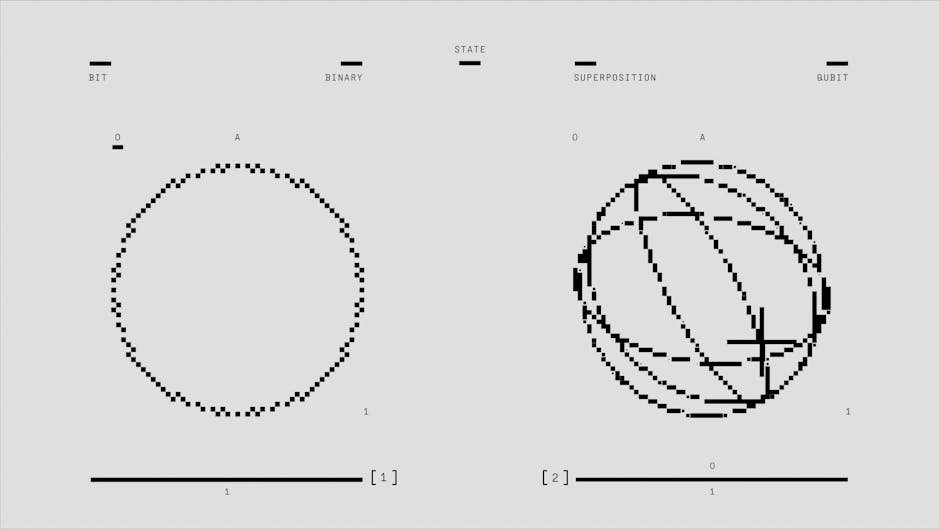
The whole thing hinges on a concept called superposition. This crazy idea means a tiny quantum particle can exist in multiple states at the exact same time. It’s like it can’t quite make up its mind.
Think of it: instead of a particle spinning clockwise or counter-clockwise, it’s doing both until you see it. Its spin isn’t just one direction. It’s potentially all directions simultaneously. Someone told me it’s like a salt shaker being on the kitchen counter and on the dining room table. Seems impossible in our big, regular world. At the quantum level? It’s hella different.
The Many-Worlds Interpretation: Our Splitting Reality
This idea of reality branching off? It’s directly linked to the Many-Worlds Interpretation. Hugh Everett III came up with it way back in 1957, when he was just a Ph.D. student at Princeton. His theory says that every single quantum measurement makes the universe split into loads of parallel universes. Each one shows a different possible outcome.
So, when our theoretical scientist pulls that trigger, the universe doesn’t just pick one result. Instead, it literally creates new realities. In one, the particle spun clockwise. Our scientist enjoys another sunny day. In another, it spun counter-clockwise. They’re gone. And in a third, maybe the particle wasn’t even found! Every single thing that could happen gets its own universe. That’s a lot of parallel worlds to deal with.
Schrödinger’s Cat: A Crazy Cousin
You just can’t talk about quantum weirdness without bringing up Schrodinger’s Cat. Classic stuff. Another thought experiment, this one tries to show how super-weird superposition becomes when you scale it up. You stick a cat in a sealed box. Inside, there’s a radioactive trigger, a Geiger counter, and some poison gas. If the trigger goes off, gas gets released. The cat dies. If it doesn’t, the cat lives.
Until you open the box and look, that cat is theoretically both alive and dead simultaneously. It’s in superposition. But cracking open that box? That “collapses” the superposition into one single reality. Schrödinger’s Cat really shows how observing changes things. Also, it helps explain the quantum suicide setup—just, you know, with less immediate human dread.
Purely Theoretical: We Can’t, And We Shouldn’t
Let’s be perfectly clear: the Quantum Suicide Experiment is totally theoretical. We don’t have the tech to make it happen, and we definitely don’t have the ethics rules (or the people!) to even think about it. Nobody’s asking a scientist to off themselves to prove the multiverse. The vibe around that is a definite “no go.”
But another thing: it’s still a super cool mental workout for physicists. A way to test what quantum mechanics and the Multiverse Theory really mean. All without hurting anyone. It’s about figuring out what reality could be, not something we’re building at the local science lab anytime soon.
Quick Q&A
What’s a “thought experiment”?
It’s a mental game. A theoretical scenario. Often, it’s stuff you can’t actually do in real life. No tech, no ethical approval, too hard to set up. But it helps explore big science or philosophy ideas.
When did the Quantum Suicide Experiment pop up?
The core ideas emerged in the 1950s. Hugh Everett III, a physicist, then worked on the deeper concepts in 1957.
Why can’t we actually do the Quantum Suicide Experiment now?
Two main problems, really: We just don’t have the fancy tech to mess with those quantum particles and measure them just right, in that life-or-death way. Hard to make happen. And also, the huge ethics problem of deliberately putting a human life in danger? That makes such an experiment just wrong.