Protostar Unpacked: How Stars Are Actually Born (And What Happens Next)
Ever really think about where stars even come from? I mean, we all say they form, they burn bright, and eventually, poof, they’re gone. But what’s the real story behind that “birth” part? Honestly, it’s wild. It’s intense. And it all kicks off with something way cool called a protostar.
Stars Get Their Start in Cosmic Nurseries. Huge Gas Clouds
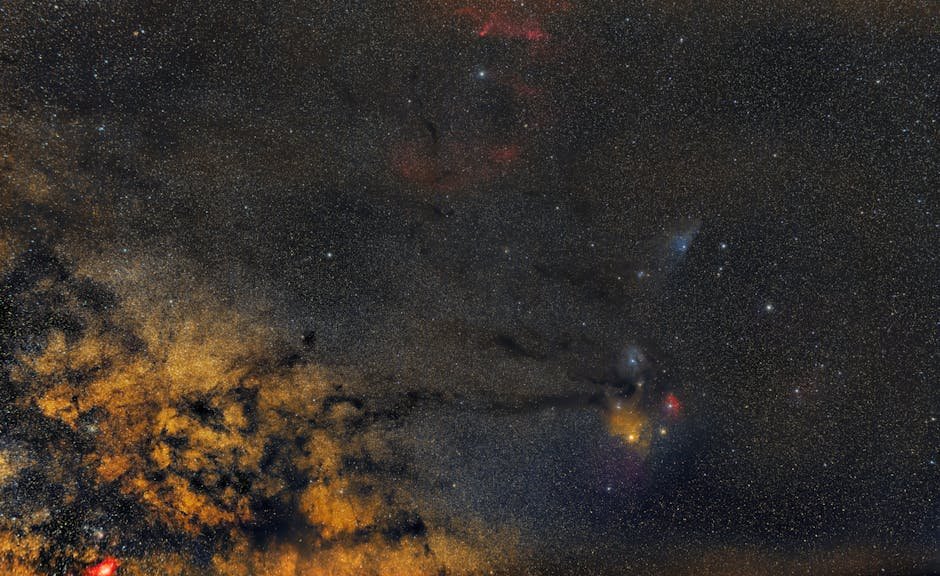
Picture our universe like a seriously busy factory floor. Stars aren’t just appearing out of nowhere. No sir. They need a dedicated spot to get started, a stellar nursery. These massive clouds of gas and dust? Often called nebulae. They’re basically the universe’s ultimate places for new stuff to grow. Some are left over from way back when, others are just the mess left by huge star explosions. Chaotic places.
And these nurseries, like that famous Eagle Nebula, they’re loaded with tons and tons of hydrogen gas and other elements. That’s where new stars slowly start to take shape. This is where the real action begins. Pure physics, baby.
Protostars: A Star in the Making. Like In the Oven
Imagine a baby, still growing. That’s your protostar. It’s super young. Just a giant ball of gas and dust that’s begun to mush together. Hydrogen atoms in those clouds bang into each other, forming tiny little clumps—a cosmic snowstorm, pulling in even more hydrogen and helium.
These growing clumps get heavier. They suck in even more stuff using gravity. And the cool part? They start heating up. They even glow a bit. From far off, they might look like a star. But don’t mess up. A real star needs constant nuclear fusion burning up its core. And a protostar? Not quite there. Still cooking.
Not All Protostars Become Stars. Hard Truths
It’s a tough galaxy out there, seriously. Not every protostar makes it all the way. Some just don’t grab enough material to get that crucial nuclear fusion going. So they end up as brown dwarfs. Think “failed stars”—balls of gas that have a faint glow but never truly light up. A real bummer.
Sometimes, a young protostar gets too close to some massive, powerful space object. Its delicate insides just get ripped apart. Material flies everywhere or some big shot just takes it. A sad, early finish.
And another thing: The craziest outcome? Too much of a good thing. If a protostar builds up mass way too fast, an out-of-control nuclear reaction can happen. Instead of becoming a chill, stable star, this runaway event can actually make it collapse. Straight into a black hole. Talk about a dramatic exit. Wild, messy stuff.
Protostars Can Make Planets Too. Awesome
It ain’t just about the star itself; it’s about the whole dang neighborhood. As a protostar spins and gathers material, all that extra gas and dust doesn’t just belly-flop right in. Nope. It flattens out. Makes a spinning disc around that brand-new stellar core. That’s how it starts.
And this protoplanetary disk? This is where future planets are born. Dust sticks together, gravity pulls them in, and over time, these small clusters grow into bigger and bigger objects. Eventually, they become the planets you know.
Taking Its Sweet Time: A Protostar to a Real Star. Can Be Millions of Years
Patience is key in space, trust me. The journey from a gas clump to a full-on, shining star isn’t an overnight thing. For stuff about the size of our Sun, this change can happen pretty quick: 10,000 to 50,000 years.
But, for bigger protostars, or those stuck in tricky spots, the whole thing can drag on. Like, 10 million years. It’s a slow, slow process. Mass, gravity, and internal pressure fight it out until that fusion switch finalmente flips on.
Proof of Protostars? The Nineties, Man
For ages, protostars were just, well, an idea. Scientists had a pretty good guess how stars would form, with initial thoughts coming out around 1966. But actual, solid proof? That was a totally different challenge.
And Because it wasn’t until the 1990s. Thanks to better telescopes and these awesome “planet hunters” checking out the cosmos, real evidence for these stellar eggs finally showed up. These observations absolutely sealed the deal, confirming the protostar’s place as the true start of a star’s life.
Our Sun Was Once a Protostar. True Story
Yeah, even our super comfy Sun? It had a humble beginnings. Billions of years ago, it was just a giant ball of gas. A protostar. It was sucking in more and more material in its own stellar delivery room. The pull of gravity raged on, pressure and heat built up, until boom! Nuclear fusion ignited.
And once that fusion roared to life, our Sun became the dependable star we see now. Holding our whole solar system together. And all the leftover bits in that swirling disk around it? That’s what became Earth, Mars, Jupiter, and every other planet doing its thing. Pretty cool how life emerged there.
Quick Questions, Quick Answers
What’s the biggest difference between a protostar and a true star?
A protostar is an early star. Still grabbing stuff. No stable nuclear fusion yet in its core. A real star? Got enough mass and pressure inside to get that fusion going and keep it going.
Can a protostar create planets while it’s still being born?
Yes. As a protostar gathers mass, it also pulls in nearby stuff into a spinning disk. This protoplanetary disk is where dust and gas stick together. Eventually, planets form.
How long does it take for a protostar to become a stable star?
It totally depends on the protostar’s size and where it lives. It can take anywhere from a fast 10,000 years. Or a really long 10 million years for it to fire up into a stable star.