Nebulae: The Universe’s Wildest Star Factories
Ever looked up at night, for real, and just thought, “Where the heck do all those twinkly lights come from?” Most folks down here are just binging Netflix. Totally oblivious to the whole universe outside, busy cooking up new stars. You might figure stars just… exist. But nope. They’re born, and they kick the bucket, too. Just like us. And where does all this amazing, cosmic action happen? In places we call Nebulae.
Stars: They Live Fast, They Die Young (Sometimes)
Stars are basically massive, fiery things. They pop into life. Then they spend their days burning fuel. And then, eventually? They’re gone. How they die, though? All about their size.
See, if a star’s pretty small—like our sun or even smaller—it just fades out. No big fireworks. Its outer parts kinda drift off into space. What’s left? This tiny, super-dense bit called a white dwarf. These dwarfs just get cooler. Their nuclear fires slow down. After quadrillions of years, we think they turn into theoretical “iron stars.” Over even more time, these iron stars might tunnel into black holes. Then they just slowly evaporate. Wild.
But what if a star is, like, five times bigger than our sun? Oh, that’s different. These monsters go out with a bang. A supernova. Its outer layers just explode everywhere. What’s left behind? Either a neutron star. Or, yep, a black hole.
So, we get how they die. But how do we even get them in the first place?
Nebulae: Where All the Gas Is
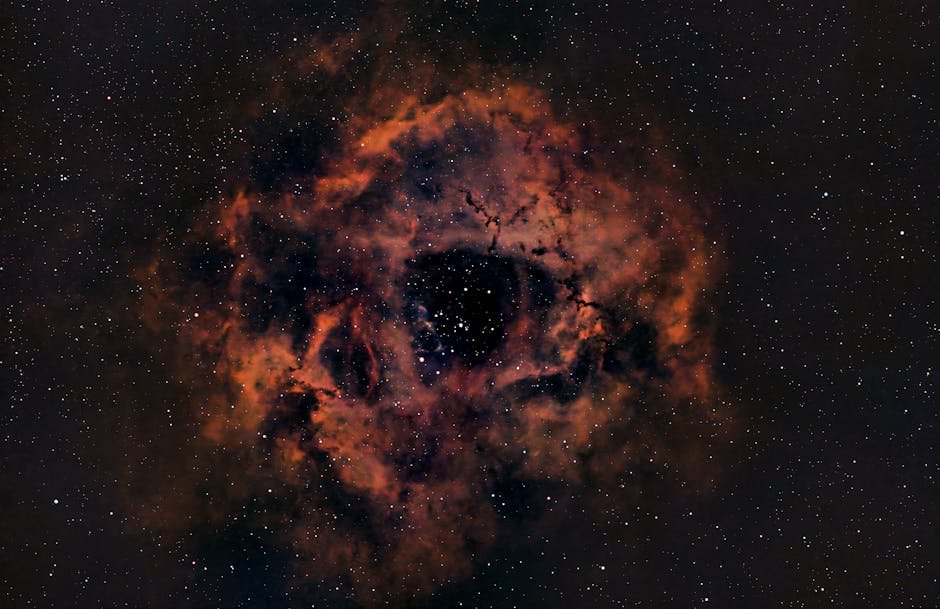
So, where do new stars come from? You gotta look at the Nebulae. The name? It’s Latin for “mist.” And that’s exactly what they are. Just massive clouds of gas and cosmic dust, floating around in space. From a distance? Straight-up amazing.
But walk right up to your average nebula, you’d notice it’s mainly hydrogen. Like, 75% of it. Another 24%? Helium. And that tiny, tiny bit left, just 1%, is all the other stuff: carbon, oxygen, silicon, iron. Basically, it’s the raw ingredients for, well, everything.
Built From Baby Universe Bits and Dead Star Stuff
These big space clouds form in two main ways. A huge portion of them are just leftovers from the Big Bang itself. Nearly 13.8 billion years ago! Massive hydrogen bits from way back then eventually clumped together. Formed stars. Then galaxies. And a lot of that old gas? Still out there, chilling.
And another thing: the real show for nebula creation? Dying stars. Remember those giant ones that blow up as supernovas? Or the smaller ones that just shed all their outer parts? All that flung-out junk—gas, dust, space debris—goes flying. Over long, long periods, it collects. It reforms. Then creates these beautiful space clouds. Check out the Helix Nebula. It’s only 700 light-years from Earth. And it started from a small star that died around 30,000 years ago. Its last breath made something truly gorgeous.
Not All Nebulae Are the Same, Believe It
Not all of these space clouds are built the same, obviously. You’ve got your planetary nebulae, like the Helix. Formed from smaller, dying stars. Then there are emission nebulae. These glow crazy bright from the heat of stars inside or next to them. They blast out this amazing, super vibrant light.
You also get reflection nebulae, which just bounce light off nearby stars, making a foggy, weird glow. And next? The total opposite. Dark nebulae. These things are so packed with gas and dust that they totally block out light from whatever’s behind them. Making deep, cosmic shadows. Super quiet in there.
Where Stars Are Born. Literally
The whole reason we call nebulae “stellar nurseries”? Billions, maybe even trillions, of stars have been born right inside them. And the stuff inside these clouds? It’s not evenly spread out. You’ve got denser bits. And thinner ones, too.
In those dense spots, gas starts piling up. Gravity pulls it in. More gas clumps together. Gravity gets stronger. Brings in even more. If enough hydrogen and helium get packed in, the pressure and heat go way up. Boom! A new star is born. It’s a pretty rad system.
The Universe Rips, Recycles, and Reuses
Here’s where it gets kinda wild. Those super-massive stars—like UY Scuti or Stephenson 2-18—they live fast, die young. Only around for a few million years. But our sun, it’s smaller. Expected to live for billions.
So, the big guys die quick. But their death fuels the birth of smaller, way longer-lived stars. And another thing: It’s just the universe’s way of recycling. Making sure it keeps going. Creating new, healthier stars from the old ones’ “corpses.” That’s why those Hubble pictures of glowing nebulae look so awesome. They’re full of new light. Because it’s a constant beginning. And yes, our own sun probably came from some massive star dying. Talk about ironic.
Black Holes? Yeah, They Make Stars Too
Is a nebula the only spot a star can pop up? No. Surprisingly, there’s another crazy way stars get made: black holes. Yeah, you heard that right.
Supermassive black holes, while sucking in tons of energy and matter, don’t always swallow everything at once. A lot of this material forms a swirling disk around the black hole. Sometimes, this disk gets so densely packed. So much energy and stuff. That the extreme gravitational pressure, mixed with all that matter, triggers nuclear reactions. Right there.
So, just like in a nebula, that intense pressure and packed-in mass starts stable nuclear fusion. Making brand new stars! Right inside the black hole’s own disk! These baby stars grow. And then often get flung out. Escaping the black hole’s grip to live their own lives. Another wild cosmic irony: the universe’s top destroyer can also be its top creator.
Quick Q&A
Q: What’s the main stuff Nebulae are made of?
A: Nebulae are mostly made of about 75% hydrogen and 24% helium. That last 1%? It’s got stuff like carbon, oxygen, silicon, and iron.
Q: How many types of nebulae are there?
A: While they have tons of kinds, common types are planetary nebulae, emission nebulae, reflection nebulae, and dark nebulae. They all look and act a bit different.
Q: Can stars get born without a nebula?
A: Yep. Wild, right? Supermassive black holes can also make new stars pop up within their swirling disks when matter and energy get super crushed and squished.