Wernher von Braun in California: The Nazi Rocket Scientist’s American Legacy
Think tech in the Golden State just popped up? No way. Ever wonder about the really messy roots of America’s space program? That whole saga, for better or worse, shaped everything. From our defenses to our craziest space dreams out here on the west coast – dreams that became reality. Wernher von Braun California starts not in some sunny lab here, but in the dark labs of Nazi Germany. What a wild ride. Morally ambiguous. Scientific genius smashing straight into unspeakable evil. A legacy still hotly debated.
Wernher von Braun: Rich Kid with a Space Bug
Werner Magnus Maximilian Freiherr von Braun? Definitely no rags-to-riches story. Born in 1912 into a seriously wealthy Prussian family. Royal blood flowed, too. King Philip III of France, Valdemar I of Denmark, Robert III of Scotland, Edward III of England… He was connected. His own dad? Germany’s Minister of Agriculture during the Weimar Republic. This dude started life with every advantage.
But his mom. She sparked the real passion. Gave him a telescope as a kid. Astronomy bug bit. Hard. And another thing: He wasn’t just a science whiz; played Beethoven and Bach like a pro, even wrote his own stuff. Piano, cello. But math and physics in boarding school? That’s where he really crushed it. Always dreaming of space. He snagged an engineering degree in Berlin by 1932, specifically in rockets and their fuels. The German army, always looking for an edge, heard about his smarts. Funded his work. Especially liquid propellants. Then Hitler showed up. Chilling. Von Braun’s rocket research suddenly became critical for the new regime.
Von Braun’s Nazi Ties: A Big, Dark Mark
Here’s where it gets hella dark, fast. Von Braun joined the Nazi Party in 1939. Apparently, he was “encouraged” to. He claimed he had no political choice if he wanted to keep building rockets at Peenemünde. Some even say the Gestapo picked him up later. For anti-war talk. For slowing down the missile program. He supposedly bitched about Hitler, called him a “Charlie Chaplin-mustached fool.” Said he was “a pitiless human being” who thought he was God.
But it gets worse. He also joined the SS. A cavalry officer. Himmler asked personally. Posed for a photo in uniform. Ugh. He later said that was the only day he wore it. Said he left the SS within a year. These are the details that give you the creeps.
During World War II, Von Braun kept developing what became the Aggregat 4 rocket. Better known as the V2. Not just some egghead experiment. It relied on forced labor. Concentration camp prisoners. Thousands died making it. A survivor even testified that von Braun picked prisoners from Buchenwald himself for his lab. The V2, literally “Retribution Weapon 2,” blasted off over 3,000 times. Mostly at London. Killing 9,000 civilians. When the rockets did hit their mark, von Braun reportedly joked they were “working perfectly, but landed on the wrong planet.” A pretty messed up joke. Someone else later quipped, “I aim for the stars, but sometimes I hit London.” Deeply disturbing mix of genius and tragedy.
Operation Paperclip: Trading Sins for Science
As WWII ended, smart German scientists became massive prizes. The Soviets just grabbed folks. But the U.S. had a different, sneaky plan: Operation Paperclip. Kicked off secretly right after Germany surrendered. The whole thing was named for the colored paperclips used to mark the really good scientists. Over a thousand German scientists. Including von Braun. Whisked away to America. The goal? Grab their brainpower for our budding space program.
This was a bizarre twist of fate. Von Braun was on America’s bad guy list. Yet, instantly, he was a superstar. His brother, Magnus von Braun, rode a bicycle to an American army unit. Said, “My name is Magnus von Braun. My brother invented the V2 rocket. We want to surrender.” Just like that, the American story started.
Officials basically wiped out his Nazi past on paper. So he could work. No surprise there, not everyone was thrilled. Even Albert Einstein bristled when von Braun was working for the U.S. Still, Cold War was raging. America wanted that Nazi rocket tech. Had to beat the Soviets.
Von Braun’s American Dream: Moon Shots and Missiles
Von Braun’s early years here? Not a huge shift from his V2 days. He designed ballistic missiles for the U.S. Army. His work built the Redstone launch site. And the Jupiter missiles. Some went to Turkey during the Cuban Missile Crisis.
But his childhood dream of space travel never faded. He designed the Juno II. And Saturn I vehicles. He started writing articles. Human spaceflight. Even thought up a permanent Moon base. Mars missions. Real visionary, this guy. Even sparked 2001: A Space Odyssey.
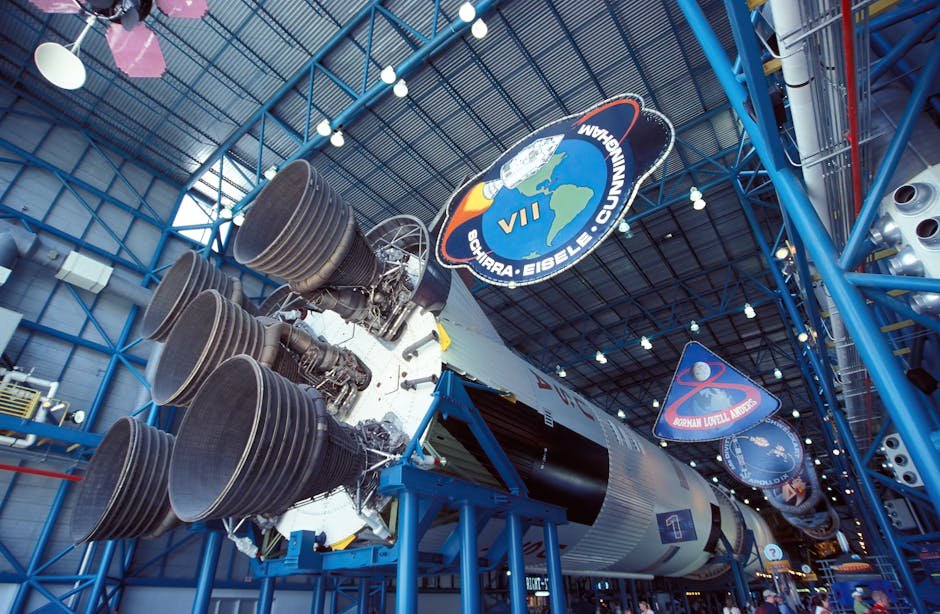
The real game-changer hit in ’57. The Soviets shocked pretty much everyone. Launched Sputnik 1. First artificial satellite. America caught flat-footed. Suddenly, von Braun’s designs for an orbital vehicle weren’t “not necessary.” They were urgent. NASA popped up within a year. And von Braun became a foundational figure. Managing the Marshall Space Flight Center. Under his lead, the legendary Saturn V rockets – the powerhouses for Apollo – got built. His program. Humanity walked on the Moon. What a dream. And he worked with Walt Disney, too! On the “Man in Space” TV show in ’55. Millions watched. Made space travel super cool for a whole generation.
A Lingering Shadow: Von Braun’s Troubled Legacy
Even with Apollo wins, the past… it just hangs there. The ethical quagmires around his WWII work? Undeniable. Especially the forced labor for the V2s. His Nazi Party and SS connections? They really muddy up his scientific genius. Celebrate the Moon guy? When he was mixed up in atrocities? Tough one. Science communities, historians, ethicists. They’re still struggling with it.
Science & Morality: A Collision Course
No easy history lesson, this. Just shows how science and right-and-wrong smash together. Messy truth. Von Braun’s story forces us to see beyond black and white. Into the murky gray areas. Where human cleverness and human depravity intersect. Could America have done it without these “useful” (but, ya know, morally sketchy) scientists? Big question. No easy answer.
Genius, Complicity, And A Troubling Vibe
His life. From rich kid to his death at 65 from pancreatic cancer in ’77. It’s a jumble: smarts, dirty deeds, big dreams, just surviving. Progress, human cost. All there. Praise his engineering. Stare at Saturn V. Or just feel a cold shiver. All totally valid. Ultimately, his story isn’t just about rockets. It’s about how awesome scientific leaps sometimes burst from the most morally bankrupt places. His legacy, touching everything from space stuff to California’s own aerospace industries. Still a powerful, troubling vibe.
Frequently Asked Questions
Q: Where was Wernher von Braun born?
A: Wernher von Braun was born on March 23, 1912, in Wirsitz, which is now part of Poland.
Q: What was the V2 rocket?
A: The V2 rocket (Aggregat 4) was the world’s first long-range guided ballistic missile, developed by Wernher von Braun and his team for Nazi Germany during World War II, and used to target Allied cities like London.
Q: What was Operation Paperclip?
A: Operation Paperclip was a secret U.S. program after World War II that brought over a thousand German scientists, including Wernher von Braun, to the United States to work on America’s space and military programs, bypassing their Nazi pasts.