Quantum Mechanics: Exploring the Randomness and Reliability of the Universe
Ever felt like the universe is playing mind games? Like stuff just happens, no rhyme or reason? Turns out, way down deep, the universe might be hella random. Quantum Mechanics Randomness? Not just some weird theory. It’s a core truth showing us a reality way stranger than anything we see every day. When pioneers like Marie Curie started checking out radioactivity, they were stumped. Why? Because an atom’s decay process was just crazy random. So unpredictable.
Classical physics, before all this, figured every event had a clear cause and effect. A definite outcome. But with tiny quantum particles? You’re rolling the dice.
Quantum Mechanics: Randomness at the Universe’s Core
Predicting when an atom ticks over, or if it’ll light up? Impossible. Total chance. And another thing: this wild randomness actually forms the base for some of science’s most super-accurate predictions. Seriously.
We’re talking about a level of accuracy that’s hard to grasp. Take Quantum Electrodynamics (QED), for instance. Our model for how light and stuff interact. It works almost perfectly. Only limits? Our gear. Imagine measuring the distance between the Eiffel Tower and the Statue of Liberty with less than a tenth the width of a human hair as an error. Yeah, that’s the kind of precision we get when measuring things like an electron’s g-factor. Nuts, right?
Predicting the Unpredictable: Quantum Mechanics’ Powerful Probabilities
Even in atomic orbitals — you know, with their usual shapes, energy levels — an electron’s spot? Totally random. Unpredictable. Full stop.
And another thing: one of quantum mechanics’ biggest wins? Proving Albert Einstein wrong. He famously said, “God does not play dice with the universe.” But according to quantum theory? Yeah, God’s throwing them bones alright.
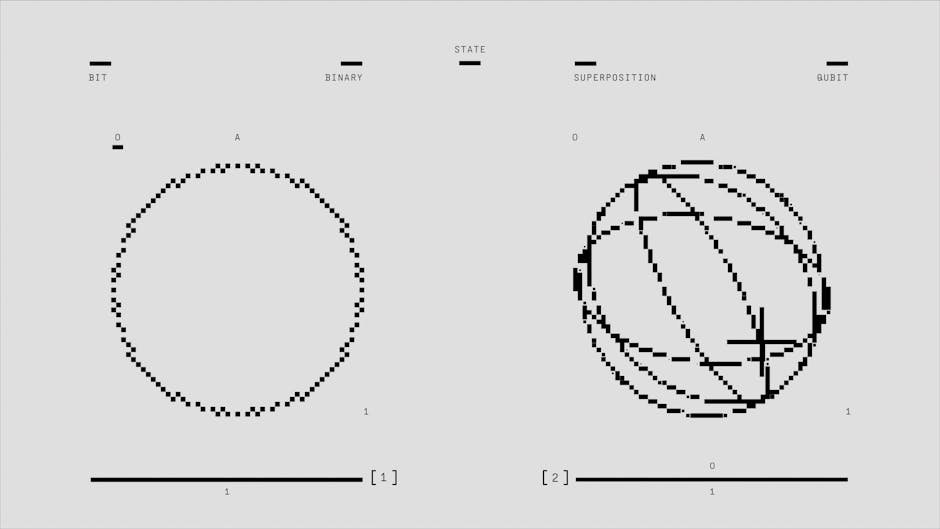
Stuff exists in many places at once until you measure it. Once observed, poof! It just picks a spot. The outcome of that observation? Wildly random. It’s not just looks random; it is random. Seriously. You can’t say, “Oh, it looks random, but deep down it’s not.” Nope. Not at this scale.
Take a beam splitter. Send light through it, and the energy splits into two separate beams. Classically, as a wave, some energy goes through, some bounces back. Simple, right? But dial down the juice until you’re sending one photon at a time. It still acts like a wave, going both ways. Until it smacks a detector. Boom! Only one detector lights up. Randomly. The single photon chose a path. But which one? No clue.
The Heisenberg Uncertainty Principle: You Can’t Have It All
Classical physics? Newton and Maxwell believed in a totally predictable future. Know the start, know the end. Quantum mechanics, though? It trashes that whole idea. Pick a key player in this shake-up: the Heisenberg Uncertainty Principle.
It simply says you can’t exactly know both where a particle is, and how fast it’s going, at the exact same moment. Think football. You know where the ball is on the field, or just how fast it runs, but never both for sure. In this quantum world, if you try to nail down one thing, the other just gets fuzzy.
But get this: even without perfect knowledge, quantum mechanics predicts the probabilities of different outcomes with super high accuracy. It’s like rolling dice. Can’t know the number. But you totally know the odds for each side. Quantum mechanics figures out these probability waves for way crazier systems. An electron around an atom? Not a tiny dot. It’s a probability cloud, showing where it might be, or where it totally isn’t. Remember weather forecasts? They know the chance of rain, but not which specific street gets drenched. You still grab an umbrella, right? That’s randomness, applied.
Shaking Up Determinism: The Quantum Challenge
Why’s this randomness theory considered the most accurate ever? Because even our big, everyday world, which seems predictable, nope. Not really. Experiments with identical starting conditions still give different results. Same start, different end. Probabilities rule here too. Quantum mechanics is great at figuring out those probabilities, showing us a way clearer picture of how reality actually works.
Classical theories? One outcome. Quantum mechanics, though, gives you the probabilities for all possible outcomes. All outcomes, baby. It’s like betting on a football game. Can’t guess the exact final score, but you can totally get some hella good odds on which team is most likely to win. Quantum mechanics gives us those odds for the universe’s craziest game.
The Enduring Quest: Are There Hidden Variables?
So, is the whole debate over? Is randomness just a basic part of reality? Or, as Einstein famously hoped, is there some deeper, predictable thing — some “hidden variable” — pulling strings behind the scenes, making Quantum Mechanics Randomness just look superficial?
A tiny, focused bunch of physicists are still on Einstein’s hunt. Like Sheldon Goldstein, Detlef Dürr, and Nino Zangi, banging away on Bohmian mechanics. These other models suggest quantum mechanics might just look random. They’ve found ways for Bohmian mechanics to squarely explain relativistic particle stuff and even hit the precise predictions of quantum field theory. It’s like those old Solvay Conference debates from 1927 are revving up again.
But get this: Quantum mechanics, with all its crazy randomness, built our modern world. But these scientists, still digging for what they see as its holes, just might offer an exciting new chapter to the story. What do you think? Could we find a hidden variable, and then maybe, just maybe, Einstein winks at us from the dusty history books?
Frequently Asked Questions
Q: If quantum mechanics is so random, how can it make accurate predictions?
A: One quantum event? Yeah, totally random. But quantum mechanics? It’s killer at predicting the probabilities of different outcomes. It describes a universe where probabilities are foundational. That means super precise calculations of likelihoods, though not certainties.
Q: What is Quantum Electrodynamics (QED)? And why’s it important?
A: QED? It’s a quantum theory for electromagnetism; shows how light and stuff interact. Insanely accurate. Seriously. Folks often call it the most pinned-down theory in physics. Measurements, like an electron’s magnetic properties? Achieved with crazy precision. Talking one part in a trillion here.
Q: So, does that “hidden variables” theory mean Einstein was right about determinism?
A: The “hidden variables” theory — Einstein totally backed this — suggests that quantum mechanics looks random, but it’s really because of deeper, secret, predictable stuff going on. Most quantum mechanics peeps say randomness is real, it’s fundamental. But a smaller group of physicists still checks out theories like Bohmian mechanics, trying to make quantum phenomena fit a more predictable universe.