Unlocking Octopus Intelligence: How Cephalopods Got Smart
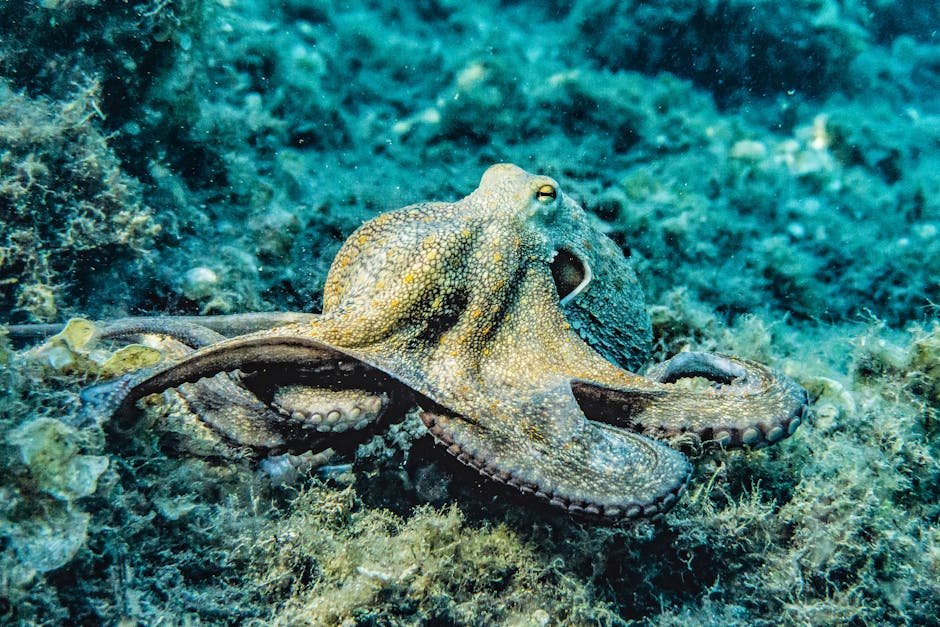
Ever wondered what alien life might look like? Forget the little green men. Look in our own oceans. Right off the California coast! Few creatures? On Earth? As weird and smart as octopuses. Their amazing octopus intelligence just blows up what we thought about brains. Especially when you realize most of their 500 million neurons… not in their head. Nope. Spread out. All over their arms. A totally decentralized brain setup. Super cool.
Thinking with Eight Arms: That Decentralized Brain Thing
Get this. Only about a third of those neurons (you know, half a billion total)? In its main brain. The rest? Across its eight arms. Not just a weird body thing. Each arm? Can smell, taste. Even kinda think alone.
Scientists watched arms respond to stuff way after being cut off from the main brain. And watching them explore, scientists saw arms going together, brain-led. Or doing their own thing. Each making its choice. Wild. Data from outside? Can skip the main brain. Let those suckers think for themselves. Serious autonomy. Fast thinking and reacting. A survival trick you just don’t see much.
Masters of Disguise: Octopus Camouflage Up Close
Octopus is a master? Camo. Its best trick. These guys without bones. Change their look? Faster than any movie FX team. Pop! Gone. Colors and bumps. Into a reef. Or rocky beach.
Secret is three tissue layers. Chromatophores. Little bags of black, red, yellow color. Muscles pull ’em open. Pull the bag. Color pops. Underneath? Iridophores. Shiny cells. Make metallic blues and greens bounce around. Then leucophores. For white; they just mirror the light around them. Mash ’em all together. A nearly perfect hide.
But wait, there’s more. And get this: an octopus can mess with its skin texture. Papillae. Make bumps, ridges. Looks like seaweed. Or coral. Fastest disguise. In the whole animal world. Done in 200 milliseconds. Wildest part? Most of these guys can’t even see color. So how do they match colors? They don’t even see them! Their skin? Light-sensitive. Full of photoreceptor genes. Lets it ‘see’ and react to light. Even off the body. Cra-zy. Talk about a full-body sensory experience!
Smarter Than We Thought: Brain Ideas Challenged
For ages, eggheads wondered why some animals got super smart. Big idea: living in groups? (You know, social stuff, helping out, tricking others?) That made brains grow huge and tricky. Think humans, primates, dolphins.
But an octopus? A loner. No social bonds, no hierarchy. Its smarts? Don’t fit there. So, time for a rethink. Say hello to “ecological intelligence.” This idea says things like running from predators, bagging food, and fighting for stuff. Strong enough to make animal brains go complex. Seriously. They lost their shells 140 million years back. Super exposed. Outsmarting danger. Their main way to live. Hard work.
Future Thinkers: Octopuses Plan Ahead
Planning ahead? Not just for us. Octopuses do stuff that really makes you think they see the future. Connect what they do now to what they’ll need later. Amazing. Like that famous ‘coconut carrying octopus.’
This smarty has been seen. Grabbing coconut shell halves. Dragging them around. Why? Portable house. When it hits an open spot. This isn’t random. It’s on purpose. Imagining ‘I’ll need shelter later.’ And doing something now. Dragging heavy shells? Big deal. Shows a kind of tool use. We only thought humans, some apes, birds did that. Gotta respect that kind of thinking ahead.
Just for Kicks: Playful Octopuses!
Play? Usually social. Helps with moving, figuring out who’s boss, making friends. It’s usually observed in mammals and some birds. But finding playfulness in a lone ocean bug like an octopus? Changes everything.
They did a study. Put octopuses in safe, kinda boring places. Used a floating pill bottle and water current. Scientists watched some octopuses. Over and over. Shot water at the bottle. Pushed it to the pump. Current brought it back. One did it 14 times. Another? 21. Wild. Not a survival thing. It’s like bouncing a ball. In the ocean. Just for fun. And another thing: this creature, no social needs, still plays. This whole playful mood? Makes us totally rethink how play happens. Or why.
An Alien Nervous System: Brains Not Like Ours
Our nervous system? Versus theirs? Totally different animals. We got 100 billion neurons. Snails? Tiny 20,000. Octopuses? A whopping 500 million. Same as cats, dogs, parrots. Lots.
Unique part? How it’s spread out. Main brain, yeah. But then those mini-brains. In every arm. This whole setup? Blurs brain and body. Super fast. Tons of freedom. Their whole body. It’s like a big sensor. And decision-maker. Just not like our one big central processor. Wildly different.
First on Earth: Old Brainy Creatures
When we look at smart life’s family tree? We usually go down the vertebrate path. Mammals, fish, reptiles. All of us. Our shared ancient relative? About 320 million years back. But find the octopus’s split point? Farther back. Way farther. 600 million years. Simple flatworm.
Smarts grew on our branch. But totally separate in cephalopods. Two paths. Fossils say cephalopods. Over 500 million years old. Before fish. Before reptiles. Before us. So they might be the first smart animals here. A totally unique model for complex thinking. Not like us at all. And because we ditch our human-first view. We see all the ways intelligence can be. Maybe not alien. But a super old, super smart cousin.
Ask a Local: Quick Octopus Facts
How many neurons does an octopus actually have?
An octopus has around 500 million neurons. But only about a third in its main head-brain. Most? Spread out in its eight arms.
Can octopuses see different colors?
Crazy thing: most cephalopods, even octopuses, probably can’t see color. But their skin? Got light-sensitive genes. Lets it ‘see’ light. Helps it hide. Serious tech.
Why did octopuses get so smart if they’re solitary?
Because octopuses are smart? Probably because of tough environmental stuff. Like outrunning predators. Finding dinner. After ditching their shells 140 million years ago. Big pressure. This idea says: needing to be smarter than their surroundings? That made their brains grow. Not needing friends.