Deeper Dives: California Caves and Your Brain’s Inner Weirdness
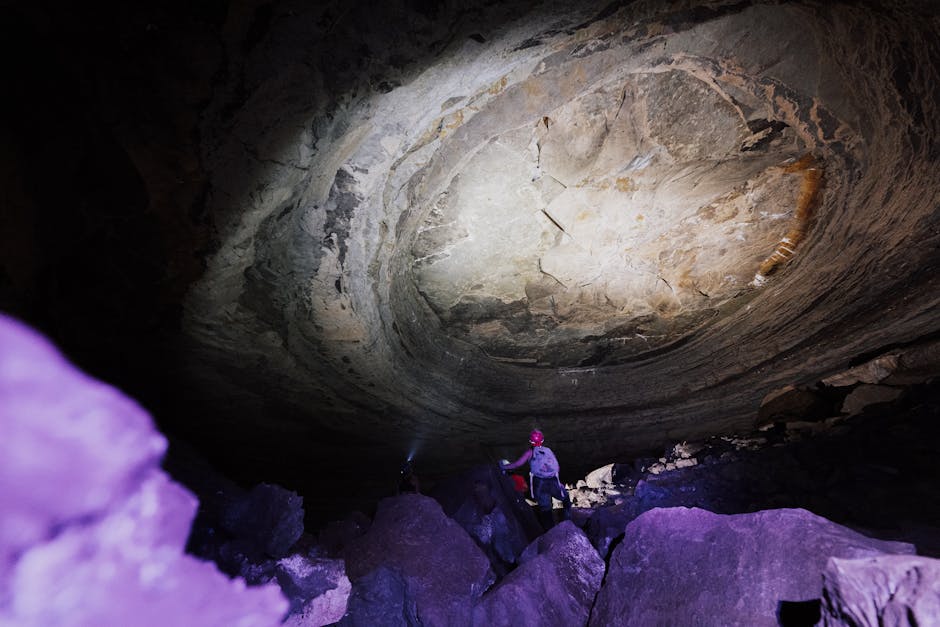
Ever wonder what happens to your sense of time when the clock stops ticking? When the sun just never rises? When the whole world outside vanishes? Forget your iPhone for a sec. Picture pure darkness. Total silence. Days turning into an endless night. This isn’t just a grim little thought; it’s practically a real-life experiment you can consider during a deep California Cave Exploration. Because down in those quiet, dark places, your inner clock? Gets seriously messed up.
So, get this. Back in 1962, a young French geologist, Michel Siffre, went into a cave. 130 meters deep in the Pyrenees. He took off his watch. Said bye-bye to sunlight, no hints of dates or hours. This wasn’t some boring geology survey anymore. It was an experiment on himself. His goal: two months underground. Alone. Cold. Always dark. Just to see what his own internal clock would do.
Your Body Clock Goes Wild Without Sunlight
Without any outside signals, Siffre’s body totally lost its grip on the normal 24-hour day. His internal beat stretched. Dramatically. Later, other people in similar experiments found themselves shifting sometimes into seriously weird, stretched-out 48-hour cycles. We’re talking 36 hours wide awake, then a solid 12 to 14 hours of sleep. Nuts.
And Siffre? After his first two-month run, he genuinely believed only 35 days had passed. The actual time? Over 60 days. His brain basically squashed reality by half. This wasn’t just a feeling. It actually became a measurable thing. It proved our body clocks don’t naturally stick to a 24-hour day without something nudging them along.
Dark Isolation: Mind-Bending, Memory-Erasing, and Hallucinations
Turns out, a cave can really mess with your head. Siffre’s sense of time got super twisted. Asked to count 120 seconds, he’d regularly take over five minutes. His mind essentially cut time in half. A real-world 24-hour day felt like just 9.5 hours to him.
And your memory? Took a big hit. After only a few days, he couldn’t tell if something happened hours or a whole week ago. Every moment just blurred into the ongoing darkness. The constant sameness and being alone brought on huge mental stress. Siffre reported vivid hallucinations: whispers, shadows flitting by. He even felt rocks breaking from the cave ceiling in his sleep. During his longer 7-month stay, the loneliness cut even deeper. He even thought a simple mouse encounter was a profound, sad event.
More Sleep, More Dreams, More Alertness
One really cool discovery during all this focused on sleep. Specifically, REM sleep – that’s when you dream. And Siffre’s info, and from other volunteers later? It showed a clear link: the longer a guy stayed awake, the more REM sleep their body craved. Every extra ten minutes awake? An extra minute of REM sleep.
Researchers were truly floored. Essentially, more dreaming meant you stayed sharper. It hinted that dreams are super important. Like a secret brain reset button. Helping your brain “catch up” and stay working right after being awake for long stretches.
Siffre’s Work Shaped How We Handle Extreme Situations
Before heading into that first cave, Siffre was just a geologist. But when he came out, blinking in the sun? He was a pioneer. He helped start a whole new study – chronobiology, the science of how our bodies run on internal rhythms. His bold, self-testing, it laid the groundwork for how we get our inner clocks.
And people noticed. Big organizations. NASA quickly paid to look at his findings. They really wanted to know how astronauts might handle space missions for ages, you know, without day-night cycles. Also, the French military saw the point. Figuring out how to get submarine crews to sleep better. Guys who spend months deep underwater. Siffre’s work opened the door for critical leaps in managing human performance in crazy, isolated places.
Science is Cool, But the Personal Cost Was Brutal
So, yeah, the scientific stuff was huge. But the personal toll on Siffre himself? So steep. He came out of those experiments not famous and rich, but in deep debt. Over $100,000 from his first projects! That’s well over $750,000 today. The isolation left him really depressed. And he had mental scars, super deep ones. He said they never truly healed.
And another thing: his experiences destroyed his personal life. His wife filed for divorce when he was gone for months. He became a legend in science, sure. But a lonely one. He wrote books, did interviews. But a piece of his mind, it seemed, just stayed stuck in the cave’s never-ending darkness.
Your Clock Might Get Better With Age (or Practice!)
Decades later, in 1999, at age 60, Siffre went down into a French cave again. Another two months alone. This time? Totally surprising. His internal clock was way more accurate. He emerged only five days off the real date. His perceived “day,” which had been just 9-10 hours when he was young, now stretched to a more believable 18-19 hours.
Maybe it was all that experience. Or maybe getting older changed his internal rhythms. Making his brain tick closer to 24 hours. Funnily enough, he’d planned to pop champagne underground to celebrate the new millennium. But because of his tiny miscalculation, he accidentally uncorked it three days late. On January 3rd. His birthday. What a way to kick off a new year!
California Caves: A Deep Think for Your Soul
Okay, so Siffre’s famous underground trips were mainly in the French Pyrenees and Texas. But listen, the sheer variety of nature right here in California gives you awesome chances for your own kind of journey. Maybe you’re not isolating for months. But it’s perfect for some serious thinking. Our natural cave systems. From the lava tubes up in Modoc County to the beautiful marble rooms in Sequoia National Park. They’re amazing spots to ponder endurance. To find yourself.
Exploring these dark, quiet worlds is seriously humbling. It makes you feel disconnected from all the surface hustle, a real reminder of how connected we are to the actual planet beneath our feet. Always explore caves safely and with experienced guides. Give the darkness its due respect. And maybe, just maybe, listen to what your own internal clock tries to tell you. In that unique, peaceful quiet spot.
Quick Q&A
How long did Siffre think he was isolated vs. reality?
During his 1962 experiment, Michel Siffre figured only 35 days went by. But he was actually isolated for over 60 days.
What’s key about how human sleep changes without time cues?
Siffre’s experiments, and others, showed that without external time clues, your body often shifts to a longer cycle. Like 48 hours total. Usually around 36 hours awake, then 12 hours snoozing. Wild!
Did Siffre’s time sense get better later on?
Totally. For his 1999 experiment at 60, after all his earlier trips, Siffre’s internal clock was way more precise. He was only five days off the real date after two months! And he felt a day was 18-19 hours, not the short 9-10 hours he’d felt in his younger days.