Check Out California’s Cold War Sites: Remembering How We Almost Blew Up the World
Ever wonder how close we came to total global meltdown? Seriously. Picture this: October 1962. Cuban Missile Crisis, peak crazy. World held its breath. On the edge of nuclear war. Today, you can explore California’s Cold War Sites. And it’s really worth remembering this close call. A truly wild event. Still affects our history, too. Makes those old missile bunkers and control centers feel super relevant, right now.
The Cuban Missile Crisis: World on the Brink
Look, the Cold War was zero joke. Two massive superpowers, the U.S. and the Soviet Union, had this intense, dangerous dance going on. Nuclear arms race. Both sides had enough firepower; wipe out the planet, multiple times over. Mutually Assured Destruction, or MAD, kept things terrifyingly balanced. You attack? You’re toast too.
So, tensions just ramped up. Fidel Castro’s revolution brought a Soviet-friendly socialist government to Cuba. Basically, America’s backyard. The Bay of Pigs invasion in ’61? Total disaster. It just brought Cuba and Moscow closer. And another thing: Soviets were miffed about U.S. nukes in Turkey and Italy. So they started secretly stashing their own nukes in Cuba.
Then, U2 spy planes snapped photos of those missile sites. Under construction. Boom. Crisis exploded. President John F. Kennedy announced a naval blockade of Cuba. He demanded the missiles out. Soviet ships, some packed with more missiles, steamed towards the blockade. The world literally hit DEFCON 2. So yeah, heavy vibes at California’s Cold War Sites. Totally.
Vasili Arkhipov: One Guy Against Armageddon
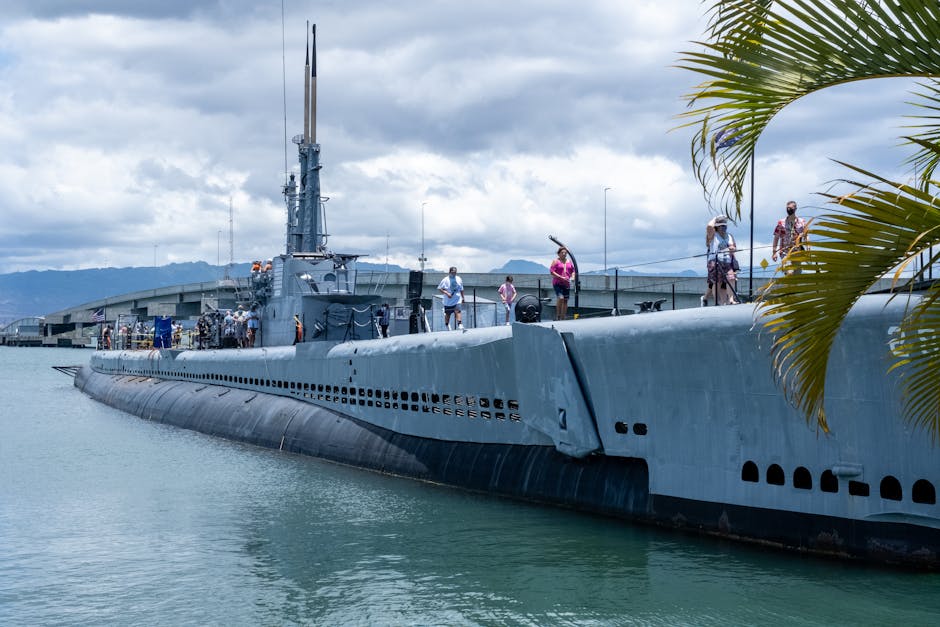
Deep under the Caribbean waves, the Soviet sub B-59 was facing hell. US Navy destroyers were dropping “warning” depth charges. Trying to make the sub surface. Inside, the heat was brutal. Oxygen thin. Moscow comms? Cut. The crew, just getting hammered by explosions, totally thought war had officially started.
Captain Valentin Savitsky, convinced they were under attack, wanted to launch the B-59’s secret weapon. A 10-kiloton nuclear torpedo. Like a Hiroshima bomb, basically. Just one launch? It could have gone totally sideways, wiping everyone out.
But this sub had a weird rule. Unlike other Soviet subs, this one needed all three senior officers to agree before launching a nuclear weapon. Captain Savitsky and Political Officer Ivan Maslennikov were both like, “Yes! Launch!” But Commodore Vasili Arkhipov, who was technically in charge of the whole group of subs, had the big say.
‘Black Saturday’ and the Mixed-Up Warning
October 27, 1962, was “Black Saturday.” Just awful. A U2 spy plane got shot down over Cuba. Also, another plane accidentally flew into Soviet airspace near Alaska. Almost starting a shoot-out in the sky. Tensions? Exploding.
Below, the B-59 crew was totally isolated. No outside commands possible. So tired, thirsty. Hot as hell, like 45 degrees Celsius. When those American depth charges hit, the crew thought, for sure, they were under attack. Savitsky reportedly yelled, “We will die, but we will sink them all!” He was ready to unleash hell.
But Arkhipov? Super calm. He argued these depth charges were probably just warnings. Not actual attacks meant to kill. Because if the Americans really wanted to destroy them, they would have. He figured the blasts were too far from the hull to do any real damage. And that tiny difference? Game changer.
Arkhipov’s Past: K-19 and the Horrors of Hiroshima
Arkhipov wasn’t just some dude in a sub. He knew about nukes. The horror. As a young sailor, he was involved in operations near Japan in August 1945. Saw the results of Hiroshima and Nagasaki firsthand. That destructive power? Burned into his mind.
A year before the crisis, as second captain of the K-19 nuclear submarine, he almost died from a meltdown. Cooling system failure. Radiation leaked. Lots of engineers and crew? Gone, trying to fix it. Arkhipov himself got long-term bad health from that radiation. And these experiences? They taught him, really, really knew, how awful un-contained nuclear power could get.
Hushed Up For Decades: Turns Out, He Was a Hero
After what must’ve been a furious argument, Arkhipov convinced Savitsky to reconsider. So instead of firing, the B-59 surfaced. Surrendered. Later, Washington and Moscow talked. Found a fix. Soviet missiles left Cuba. U.S. secretly agreed to take its Jupiter missiles out of Turkey. Crisis over. World saved. Barely.
But Arkhipov and his crew? No hero’s welcome. Nope. When they got back home in November 1962, they were chewed out. For being detected, for being forced to surface. Big screw-up, by Soviet military rules. Arkhipov’s wife, Olga, heard an admiral legit say, “You should have gone down with your ship.” His secret world-saving? Top secret forever.
Finally Recognized: The Power of Calm Thinking
Arkhipov stuck with the navy. Ended up a vice-admiral. Died in 1998, age 72, from kidney cancer — probably from that K-19 radiation. He never knew how big of a deal he was.
Flash forward to 2002, 40 years later. Archives opened up. Suddenly, everyone knew. Historians and journalists could finally see the files. And guess what? One guy. Just one, calm “no.” Probably stopped World War III. The director of the U.S. National Security Archive said it straight: “The world was saved by one man named Vasili Arkhipov.”
He and his family were honored in 2017 with the Future of Life Award. Someone called him maybe “the most important person in modern history.” So, next time you’re checking out an old radar station or missile silo — a totally mind-blowing spot to check out California’s Cold War Sites — remember Vasili Arkhipov. He’s a huge reason you’re reading this.
FAQs
Q: What was the B-59’s main job during the Cuban Missile Crisis?
A: So, the B-59? It was part of this super-secret Soviet sub group. They had nukes, nuclear torpedoes, headed to Cuba. And the mission: get close. If war started, and they lost contact with Moscow? They could totally launch their nuke, no questions asked.
Q: Why was Vasili Arkhipov’s role kept secret for ages?
A: Strict Soviet military stuff meant total secrecy back then. So, Arkhipov’s crazy brave move? Hidden. Nobody knew until way later, in 2002, when all the Cuban Missile Crisis archives opened up.
Q: What happened to the B-59 crew after all this?
A: A hero’s welcome? Nah. Not for the B-59 crew, including Arkhipov, when they got back to the Soviet Union. They actually got totally chewed out for getting caught and forced to surface. Big no-no in Soviet military rules. A straight-up failure, they said.